


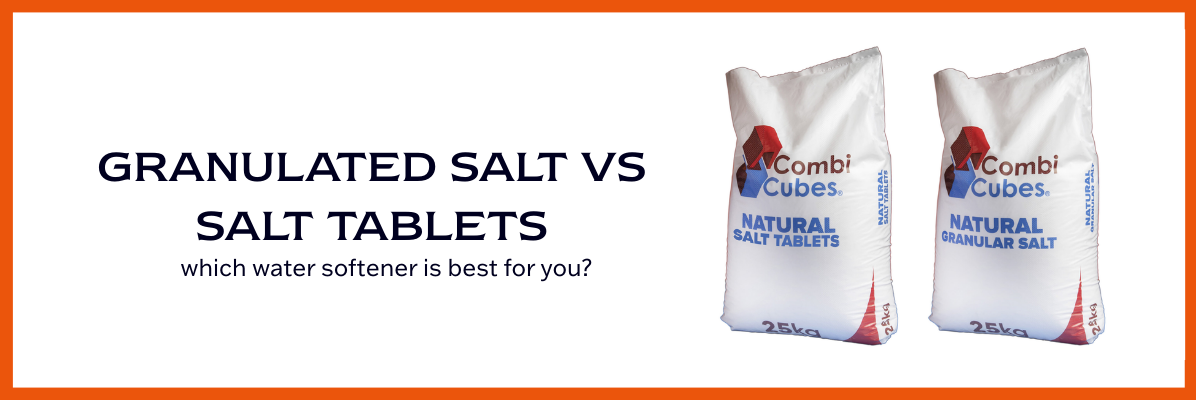
Granulated Salt vs Salt Tablets: Which Water Softener Salt is Best?
If you’re choosing the right product for your water softener, one of the most common questions is: granulated salt or salt tablets — which is better?
Both options are designed to reduce limescale, improve water quality, and protect appliances. However, they work slightly differently and are suited to different systems. In this guide, we break down the key differences between granulated salt and salt tablets to help you choose the best option for your needs.
What Does Water Softener Salt Do?
Water softener salt plays a vital role in the ion exchange process, removing calcium and magnesium minerals that cause hard water. By doing this, it helps:
-
Prevent limescale build-up
-
Improve appliance efficiency
-
Extend the lifespan of plumbing systems
-
Enhance cleaning results (glassware, laundry, dishes)
Choosing the right type of salt ensures your system runs efficiently and avoids maintenance issues.
What is Granulated Salt?
Granulated salt is made from high-purity vacuum salt and formed into small, free-flowing crystals.
Benefits of Granulated Salt
-
Fast dissolving – ideal for quick brine production
-
Free-flowing – reduces risk of clogging or bridging
-
Works well in dishwashers and smaller water softeners
-
Suitable for commercial and light industrial use
Best For
Granulated salt is ideal if you need:
-
Rapid regeneration cycles
-
A versatile option for multiple systems
-
Salt for dishwashers or compact units
What are Salt Tablets?
Salt tablets are compressed, uniform blocks of salt designed to dissolve slowly and evenly.
Benefits of Salt Tablets
-
Slow, controlled dissolving for consistent performance
-
Designed for most domestic water softeners
-
Helps prevent residue and blockages
-
Requires less frequent refilling
Best For
Salt tablets are best suited for:
-
Standard household water softeners
-
Larger systems with dedicated brine tanks
-
Users looking for a low-maintenance solution
Granulated Salt vs Salt Tablets: Key Differences
| Feature | Granulated Salt | Salt Tablets |
|---|---|---|
| Dissolving Speed | Fast | Slow & controlled |
| Form | Loose crystals | Compressed tablets |
| Best Use | Dishwashers & small systems | Domestic softeners |
| Maintenance | May need more frequent top-ups | Longer lasting |
| Flow | Free-flowing | Structured, less movement |
Which Water Softener Salt Should You Choose?
The right choice depends on your system:
-
Choose granulated salt if you need fast dissolving performance, especially for dishwashers or smaller systems
-
Choose salt tablets if you want a low-maintenance, long-lasting solution for a standard water softener
If you're unsure, always check your manufacturer’s guidelines — using the correct salt type helps prevent damage and ensures optimal performance.
Final Thoughts
Both granulated salt and salt tablets are effective solutions for tackling hard water. The key is choosing the right type for your system to ensure maximum efficiency, reduced limescale, and long-term cost savings.
By understanding the differences, you can make a smarter choice and keep your water softener running at its best.

